Discover the Iconic Palomar Observatory in Miniature 3D Form
Introduction to the Palomar Observatory
The Palomar Observatory, located in San Diego County, California, is one of the most significant astronomical observatories in the world. Home to the famous 200-inch Hale Telescope, it has been a cornerstone of astronomical research since its completion in 1948. This article explores a unique way to bring the majesty and significance of the Palomar Observatory into your home or office through a miniature 3D replica.
Understanding the Palomar Observatory's Historical Significance
The Palomar Observatory was conceived by George Ellery Hale, a visionary astronomer who also founded the Yerkes and Mount Wilson Observatories. The 200-inch Hale Telescope, named after him, was the largest effective telescope in the world for over 45 years. It played a crucial role in numerous scientific discoveries, including the discovery of quasars and the study of distant galaxies.
Design and Features of the 3D Replica
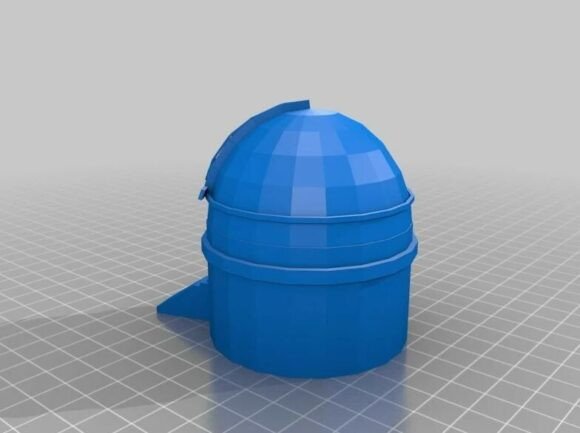
This miniature 3D replica of the Palomar Observatory is designed with meticulous attention to detail, capturing the iconic architectural features of the original structure. The model is crafted as a single-piece print, requiring no additional supports, making it both practical and visually appealing.
- Simplified yet Recognizable: The design retains the key architectural elements that make the Palomar Observatory instantly recognizable, while simplifying some details for a clean, modern look.
- Single-Piece Print: No assembly required, ensuring a seamless and robust model.
- Recommended Layer Height: 0.2 mm, providing a smooth and detailed finish.
- Suggested Material: Gray or white PLA, which closely mimics the real observatory dome and adds a touch of authenticity.
Practical Uses and Applications
The 3D replica of the Palomar Observatory is not just a decorative piece; it serves multiple practical purposes:
- Desktop Display: A perfect addition to any desk, shelf, or workspace, adding a touch of scientific elegance and inspiration.
- Educational Model: Ideal for educational settings, this model can help students and astronomy enthusiasts visualize and understand the structure and function of a major observatory.
- Science Gift: A thoughtful and unique gift for anyone interested in astronomy, science, or architecture, suitable for both beginners and seasoned observers.
How to Use the 3D Replica in Education
Incorporating the 3D replica into educational settings can enhance learning and engagement. Here are some ways to use it effectively:
- Classroom Demonstrations: Use the model to illustrate the design and function of telescopes and observatories, helping students grasp complex concepts more easily.
- Hands-On Learning: Allow students to handle and examine the model, fostering a deeper understanding of the observatory's structure and the principles of astronomy.
- Project-Based Learning: Encourage students to create their own mini-observatories, using the 3D replica as a reference, to learn about 3D modeling and printing techniques.
Common Misunderstandings and Clarifications
While the 3D replica is an excellent representation, it's important to note that it is a simplified version. Some common misunderstandings include:
- Scale and Proportion: The replica is not to scale, so it may not accurately represent the true size and proportions of the actual observatory.
- Functional Details: The model does not include functional parts like the telescope itself, focusing instead on the external structure.
Conclusion
The 3D replica of the Palomar Observatory is a beautiful and functional tribute to one of the most important astronomical sites in the world. Whether used as a desktop display, an educational tool, or a thoughtful gift, it brings the wonder and significance of the Palomar Observatory into your daily life. Embrace the opportunity to connect with the rich history and ongoing contributions of this iconic observatory through this meticulously crafted model.