Elevate Your Craft with a Burnt Charred Roof Tiles Texture Roller
In the world of creative modeling and craftwork, achieving a sense of authentic, lived-in realism can be the ultimate challenge. For those building dioramas, crafting terrain for tabletop games, or sculpting miniature scenes, textures tell a story. A smooth, pristine surface speaks of newness, while a weathered, damaged texture whispers of history, conflict, and narrative. The Burnt Charred Roof Tiles Texture Roller and its accompanying STL file offer a powerful tool to imbue your projects with this specific, dramatic history.
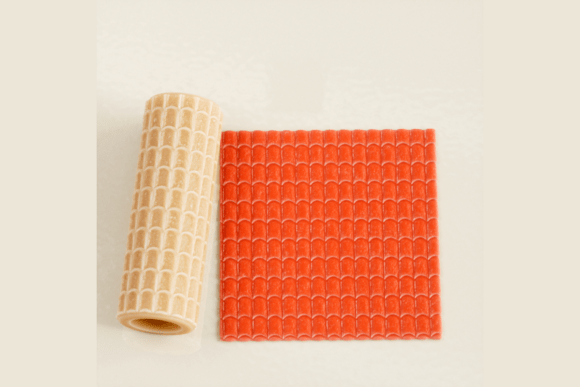
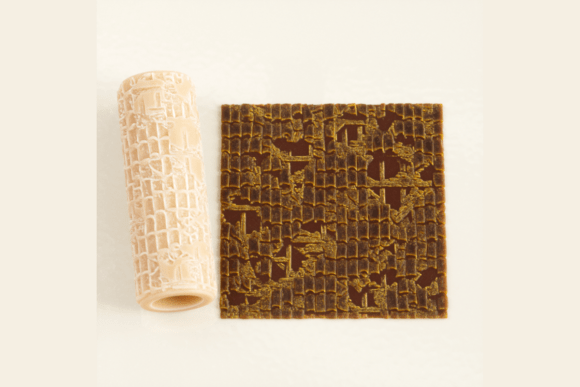
This digital design is a seamless texture roller pattern that replicates the intricate details of fire-damaged roofing. It captures the chaotic beauty of cracked and collapsed shingles, the subtle gradients of scorching, and the fractured geometry of a structure that has endured trauma. For creators looking to move beyond generic “damaged” looks and implement a highly specific, believable burnt texture, this tool provides a direct path.
The Practical Power of a Specialized Texture Tool
Why might a dedicated texture roller for burnt roof tiles matter to your workflow? The answer lies in efficiency, consistency, and depth of detail. Manually sculpting such complex damage into clay, fondant, or modeling compounds is a time-consuming art, requiring considerable skill to avoid a repetitive or artificial pattern. This texture roller allows you to apply a high-resolution, seamlessly repeating pattern with a simple rolling motion.
This translates to significant time savings, especially when creating multiple pieces for a large diorama or a gaming terrain set. Instead of painstakingly crafting each individual tile’s crack and char pattern, you can achieve a cohesive, professional-looking result across an entire surface in minutes. The benefit is not just speed, but also a guaranteed level of intricate detail that might be difficult to achieve manually, thereby raising the overall presentation quality of your work.
Connecting the Tool to Creative Goals
Consider the realistic use cases. A tabletop wargamer constructing a battlefield for a fantasy siege needs ruined buildings to set the scene. Using this Burnt Charred Roof Tiles Texture Roller on clay or suitable putty, they can quickly produce roofing sections for modular buildings that tell a clear visual story of destruction. The specificity of the texture—it’s not just rubble, it’s burnt roofing—adds a layer of narrative credibility that enhances the gaming experience.
For a historical modeler recreating a scene from a fire-ravaged village, or a post-apocalyptic diorama builder depicting urban ruins, this tool solves a key problem: how to accurately model one of the most common and visually telling signs of catastrophic damage. It supports their goal of historical accuracy or believable speculative fiction by providing an authentic visual shorthand. Similarly, a ceramic artist or potter might use the roller on clay to create unique, narrative-driven pottery pieces with a story etched into their surface.
Who Stands to Benefit Most from This Texture Roller?
The design is explicitly crafted for a wide spectrum of enthusiasts and professionals. Diorama builders and miniature modelmaking enthusiasts will find it indispensable for architectural details. Tabletop gamers and wargame terrain makers can leverage it to produce scalable, high-quality terrain quickly, allowing more time for painting and assembly. Even crafters working with fondant for dramatic cake sculptures could use it to create stunning, textured elements for themed displays.
The common thread among these users is a need for controlled, repeatable, and highly realistic texture application. They are often working on projects where the environment is a character in itself, and the quality of that environment’s details directly impacts the perceived value of their final creation. This roller serves that need precisely.
A Note on Flexibility and Technical Considerations
A key advantage of the Burnt Charred Roof Tiles Texture Roller STL file is its digital nature and high resolution. As a digital download, you receive a file optimized for FDM, SLA, DLP, and resin 3D printers. This means you can print the roller itself at whatever size suits your project—from a small roller for minute details to a larger one for broad surfaces. The recommended print settings, such as a layer height of 0.1–0.15 mm with no supports required, indicate a model designed for a successful and straightforward print, minimizing technical hurdles.
However, it’s thoughtful to consider the tool’s fit. This texture roller is specialized. It is perfect for creating burnt, charred roofing effects. If your project requires a different type of damage—like bullet holes, rust, or vine-covered decay—this specific roller would not be the appropriate tool. Its strength is in its specificity. Furthermore, success will depend on pairing the printed roller with a compatible material. Testing on your chosen clay, pottery slip, or fondant is always recommended to ensure the texture transfers cleanly.
From Digital File to Physical Realism
The journey from downloading the STL file to applying the texture is a modern craft workflow. You print the durable roller, a one-time task that yields a permanent tool for your arsenal. Then, for countless future projects, you can roll the pattern onto your chosen medium. This bridges digital design precision with the tactile satisfaction of physical creation.
Imagine applying it to a flat sheet of clay destined to become the roof of a miniature medieval inn. The roller passes over, and instantly the surface is transformed into a grid of shattered, blackened tiles. That sheet can then be cut, shaped, and adhered to your structure. The result is not just a textured surface, but a coherent story element. This process strengthens communication through visual language; a viewer immediately understands the scene’s context without explanation.
In essence, the Burnt Charred Roof Tiles Texture Roller is more than a simple pattern stamp. It is a conduit for a specific aesthetic and narrative. It empowers creators to achieve a level of realistic detail that supports their artistic and hobbyist goals, from enhancing tabletop gameplay with immersive terrain to crafting dioramas that capture moments of historical or fictional drama with authority. By simplifying the creation of one of nature’s and conflict’s most complex textures, it allows more time and energy to be focused on the broader creative vision, ultimately making ambitious projects more accessible and their outcomes more compelling.