A Handcrafted Digital Stone Wall: Exploring 3D Model Stone Wall 205
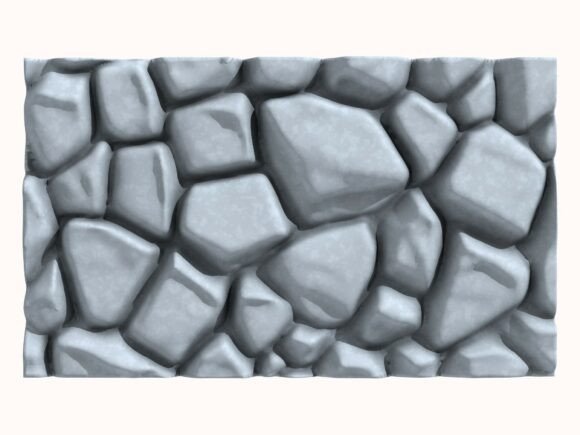
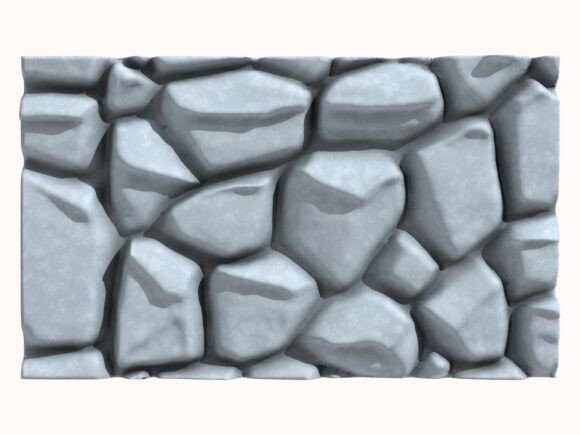
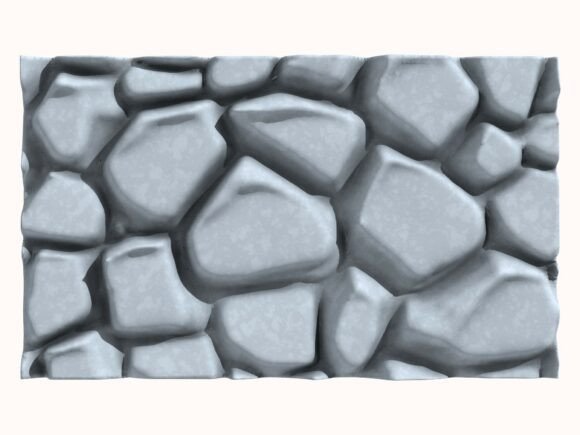
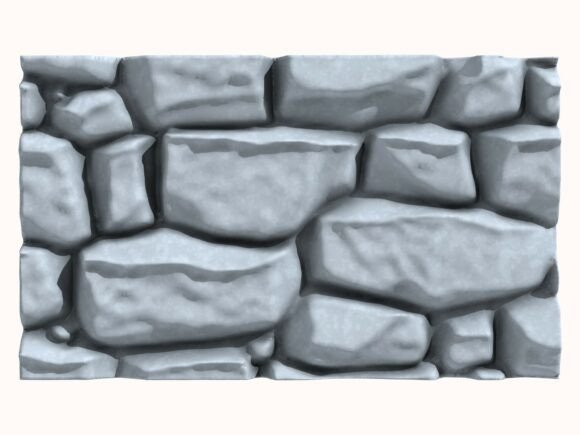
In the digital spaces where architects draft, game developers build worlds, and creators bring ideas to life, a foundational element often needed is something as simple and timeless as a wall. More specifically, a stone wall. 3D Model Stone Wall 205 is not just another digital asset; it is a meticulously handmade 3D stone wall model designed for high-quality results across a spectrum of creative and professional applications. Born from authentic creative work in Cinema 4D, it represents a bridge between traditional craftsmanship and modern digital utility.
What Makes This Stone Wall Model Unique?
At its core, this model is defined by its origin. The creator emphasizes it was fully designed and built without using any AI tools. This point is significant. It means every vertex, every polygon, and every texture detail was placed through manual modeling. The result is an object with a sense of deliberate artistry and potential organic variation that automated processes can sometimes lack. For projects where authenticity and a handcrafted feel are valuable—even in a digital context—this provenance adds intangible value.
Technically, the model is substantial, comprising 38,918 points and 38,924 polygons. This density supports high-resolution detail, making it suitable for close-up shots in visualization or for 3D printing where surface texture is paramount. The included formats—C4D, STL, OBJ, 3DS, ABC, and DAE—are a critical feature. This multi-format availability is what transforms a niche model into a versatile tool, opening doors to different software ecosystems and end uses.
Primary Characteristics and Features
- Handmade Detail: Offers non-uniform, artistically crafted stone surfaces and mortar work.
- High Polygon Count: Provides geometric complexity for realistic rendering and fine detail capture.
- Multi-Format Export: Native Cinema 4D (C4D) file, plus universal formats like OBJ and STL, and animation-ready Alembic (ABC).
- Balanced Geometry: The point and polygon counts are optimized for detail without being excessively unwieldy for many systems.
The Practical Value: Where Can You Use This Model?
The true measure of a 3D asset is its utility. 3D Model Stone Wall 205 finds its purpose in several key areas, each benefiting from its high-quality and handmade nature.
Architectural Visualization and Presentation
For architects, landscape designers, or real estate visualizers, a convincing stone wall can define a scene. This model can be imported into rendering software to create realistic garden walls, rustic building facades, or historic site reconstructions. The ABC format is particularly useful for complex scene assembly in animation workflows, allowing the wall to be integrated into moving shots of a proposed building.
Game Development and Virtual Environments
Game developers, especially those working on realistic or historical settings, require assets that hold up under player scrutiny. While the polygon count might require optimization for real-time engines, the high-detail source model is perfect for creating textured normal maps or serving as a key set-piece in cinematics. Its handcrafted look can help avoid the repetitive, "cookie-cutter" feel of some procedural assets.
Physical Creation through 3D Printing
The inclusion of the STL format directly enables 3D printing. This could be for hobbyists printing diorama pieces, educators creating historical artifacts for classrooms, or designers prototyping product concepts that incorporate a stone texture. The model's physicality is tested here—its geometric detail will directly translate to the printed object's surface.
General CGI and Creative Projects
From indie filmmakers needing a backdrop to digital artists composing a fantasy scene, this stone wall provides a ready-made, high-quality component. The availability of OBJ and 3DS formats, which are widely supported, makes it accessible to users of many mainstream and free 3D software packages.
Who Benefits from This Stone Wall Asset?
The audience for this model is broad, reflecting the diverse applications of 3D content today.
- Professionals: Architects, game asset artists, visualization specialists, and product designers seeking a reliable, detailed base model.
- Creators and Hobbyists: 3D printing enthusiasts, animators, students learning 3D modeling, and digital artists.
- Business Owners: Those in fields like heritage tourism or education who might use the model for creating promotional or instructional materials.
- Online Users: Anyone looking for a practical, versatile 3D asset to complete a project without starting from scratch.
Evaluating Suitability: Strengths and Considerations
Like any tool, understanding where 3D Model Stone Wall 205 excels and where you might need to adapt it is key to a successful project.
Core Strengths
- Artistic Integrity: The handmade approach yields unique details and a natural aesthetic.
- Format Flexibility: Its six formats reduce technical barriers, allowing use in different pipelines.
- Detail-Rich Source: The high polygon count is a benefit for final-output quality, whether a rendered image or a 3D print.
Practical Considerations
First, the polygon count. While a strength for quality, it may be too heavy for direct use in low-poly mobile games or some real-time applications. It would typically require optimization—creating a lower-poly version from this high-quality source. Second, as a specific model of a stone wall, its style is fixed. It won't magically transform into a brick or concrete wall; it is a defined artistic interpretation of stone. Finally, users should verify their target software's compatibility with the provided formats, though the list covers most common needs.
Real-World Scenarios and Applications
Imagine an architectural firm presenting a proposed countryside villa. Using 3D Model Stone Wall 205 in their visualization, they can quickly place realistic stone boundary walls in the landscaped gardens, enhancing the client's understanding of the material and atmosphere.
Consider a tabletop game designer. They can 3D print sections of this wall using the STL file to create authentic terrain pieces for a medieval wargaming diorama, saving days of manual sculpting.
In a game studio, an environment artist might use the high-poly OBJ file in ZBrush to sculpt additional wear and tear, then bake down the textures for a game-ready asset that feels historic and worn.
These examples show how a single, well-crafted digital model can seed creativity across different fields, providing a foundation upon which professionals and hobbyists can build.
Guidance for Your Project
When deciding if this model is right for your needs, ask a few straightforward questions:
- Is my project reliant on visual quality and material realism? If yes, the high-detail, handmade nature of this model is a significant advantage.
- Does my workflow require a specific 3D file format? Check the list (C4D, STL, OBJ, 3DS, ABC, DAE) against your software's import capabilities.
- Am I creating a final product for close viewing or printing? The model's detail is geared towards such outputs.
- Will I need to significantly alter the model's shape? Remember, it is a specific wall model; major geometric changes would require 3D editing skills.
3D Model Stone Wall 205 is, in essence, a digital toolkit for creating the impression of solidity, history, and craftsmanship. It serves not as a promotional gimmick, but as a practical, experience-driven solution for adding a fundamental, textured structure to your digital or physical world. By focusing on manual creation, multi-format utility, and clear detail, it offers a straightforward path from concept to implementation for anyone needing a high-quality 3D stone wall model.