Stone Wall 196: A Strategic Asset for Digital Creation
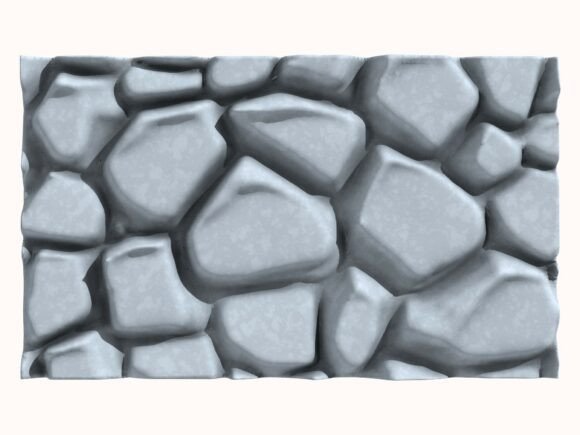
In the realm of digital creation, assets are not just files; they are tools for execution. Stone Wall 196 represents a significant investment in quality and versatility, designed not merely as a decorative element but as a foundational component for projects demanding authenticity and precision. Its utility spans from architectural visualization that requires material accuracy to game environments needing immersive detail and 3D printing projects where physical form is paramount. Understanding its strategic value is the first step toward leveraging it effectively.
The Core Advantage: Authenticity and Manual Craftsmanship
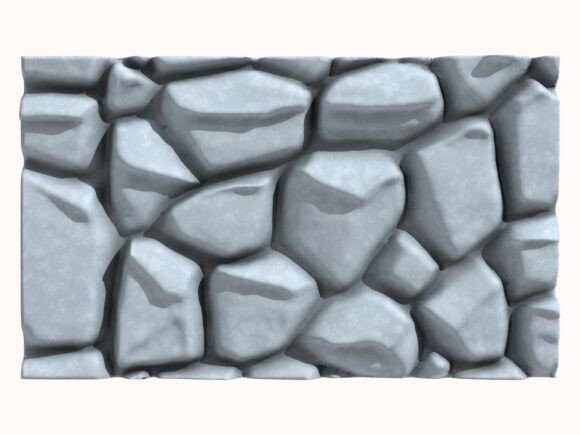
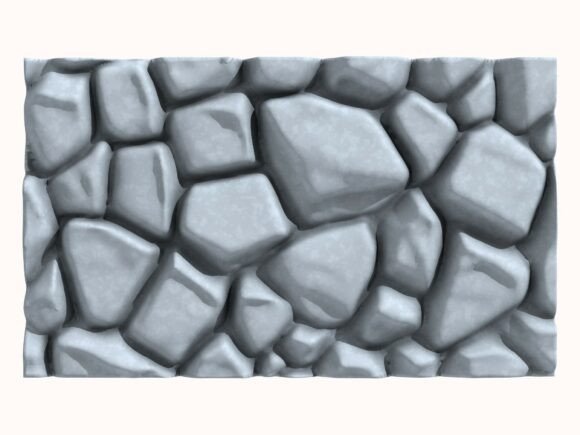
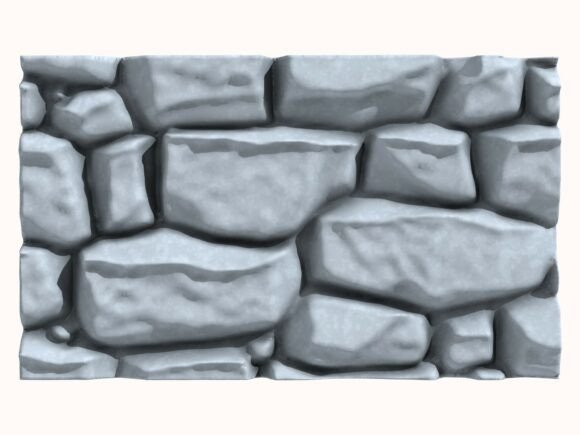
Unlike procedurally generated or AI-assisted models, Stone Wall 196 is a product of genuine manual modeling. Every surface, crevice, and texture was handcrafted within Cinema 4D. This approach yields a model with intentional, non-uniform details that mimic real-world stonework—a critical factor for projects where visual believability impacts user engagement, client approval, or artistic integrity. For professionals in architecture or game development, this authenticity translates directly into credibility and trust in the final output.
Consider a scenario where an architectural firm is presenting a renovation concept for a historical building. Using a generic, repetitive stone texture can undermine the proposal's perceived care and attention to detail. A model like Stone Wall 196, with its handcrafted irregularities, supports a narrative of meticulous planning and respect for material authenticity, thereby strengthening the client's confidence in the firm's capabilities.
Strategic Formats for Flexible Execution
The inclusion of multiple file formats—C4D, STL, OBJ, FBX, ABC, and DAE—is a deliberate feature enabling cross-platform workflow agility. This is not a collection of exports; it is a planning tool. Each format serves a distinct strategic purpose within a project pipeline.
- C4D: The native file allows for deep, parametric editing within Cinema 4D, perfect for teams whose core modeling and animation work resides there.
- FBX & OBJ: These are the bridges for game engines like Unity or Unreal, and other 3D software. Their inclusion removes a common bottleneck: model conversion, saving precious time in tight production schedules.
- STL: Directly enables the transition from digital visualization to physical prototype via 3D printing. This is invaluable for product designers, landscape architects, or educators creating tactile models.
- ABC & DAE: Support complex scene assembly and animation workflows, offering robustness for larger, dynamic projects.
A practical approach is to assess your primary output medium early in the planning phase. If your final deliverable is a VR game environment, prioritizing the FBX integration into your engine tests becomes a key task. If it's a series of high-end renderings for a marketing campaign, the native C4D file for lighting and texturing refinement is your anchor.
High-Resolution Renders as Communication Tools
The package includes six high-resolution JPEG renders at 2000x2000px and 300 DPI. Strategically, these are not just previews; they are powerful communication and decision-making aids. Before a model is even imported into a scene, these renders can be used in mood boards, client presentations, project pitches, or internal reviews to align stakeholders on visual direction.
For a marketing director commissioning an animated advertisement, these renders provide a concrete reference point for discussing art style with the creative team, reducing ambiguity and iteration cycles. For a freelance 3D artist, they serve as a portfolio-ready showcase of the asset's quality, potentially streamlining client approval. The key is to use them intentionally during the project's planning and alignment phases, not just as a final quality check.
Integrating Stone Wall 196 into Your Creative Process
Successful use of any asset requires context and intention. Randomly dropping Stone Wall 196 into a scene because it "looks good" often leads to generic results. Instead, a thoughtful integration process yields superior outcomes.
Start by defining the model's role: Is it a primary focal point, like a fortress wall in a game, or a subtle environmental detail, like a boundary in a landscape visualization? This decision governs the level of additional texturing, lighting, and polygon optimization you will need to perform. For focal points, you might invest time in custom material maps and detailed lighting setups. For environmental details, you might focus on efficient instancing and batch rendering techniques.
Planning for Long-Term Value and Reusability
A high-quality 3D model is a capital investment. Stone Wall 196, due to its manual craftsmanship and format variety, offers significant reusability across multiple projects or within a single large project's different stages. A strategic user plans for this.
For instance, a small indie game studio might use Stone Wall 196 as the base architecture for several different dungeon levels, applying different color filters and decals to create visual variety while maintaining a consistent, high-quality geometric foundation. This approach saves modeling resources and ensures a cohesive art style. Similarly, an architectural visualization studio could use the same model across different project proposals for stone-clad buildings, adjusting the scale and surroundings to fit each unique context.
The consideration here is asset management. Labeling and cataloging your modified versions of the model (e.g., "Stone Wall 196 – Weathered Variant," "Stone Wall 196 – LowPoly Game Ready") within your digital library turns a single purchase into a growing, reusable toolkit that enhances long-term operational efficiency.
Potential Risks of Uncontextualized Use
While Stone Wall 196 is a robust asset, employing it without clear goals carries risks. The most common is aesthetic mismatch. The model's specific style of stonework—its proportion, mortar detail, and surface weathering—might not align with the historical period, geographic location, or artistic theme of your project. Using it for a sleek, modern concrete design, for example, would be incongruous and weaken the project's coherence.
Another risk is performance overhead. In a real-time game engine, a highly detailed model like this might need optimization for distant views or mobile platforms. Blind importation without polygon reduction or LOD (Level of Detail) planning can lead to sluggish frame rates. The solution is pre-planning: decide during the asset selection phase if this model's detail level is necessary for all use cases in your project, and plan the technical steps to adapt it accordingly.
Finally, over-reliance can stifle creativity. Using the same premium asset repeatedly across all projects can lead to a homogenized portfolio. The strategic counter is to treat Stone Wall 196 as a premium component, not a universal solution. Combine it with custom creations or other specialized assets to maintain a unique and adaptable creative signature.
A Model for Intentional Creative Decision-Making
Ultimately, Stone Wall 196 is more than a 3D stone wall model. It is a case study in how a thoughtfully crafted, versatile digital asset can serve strategic creative and professional goals. Its value is unlocked not by the download, but by the planning that precedes its use. By aligning its application with clear project objectives—be it enhancing client communication through its renders, streamlining production via its multi-format support, or building long-term asset libraries through its reuse—you move from random asset consumption to intentional creative resource management.
For entrepreneurs building a brand's visual identity, marketers crafting immersive campaigns, educators developing engaging learning materials, or freelancers delivering consistent quality, tools like this provide a foundation of reliability. The manual craftsmanship assures originality, while the technical specifications enable execution. The final outcome depends on how strategically you integrate it into your process, making Stone Wall 196 a partner in achieving better, more credible, and more efficient results.