Stone Wall 206: Your Go-To Model for Realistic Digital Environments
When you’re building a digital world, whether for a game, a film, or an architectural presentation, the details matter. That aged, textured stone wall in the background isn’t just filler—it sets the mood, establishes the setting, and adds a layer of authenticity that pulls viewers or players deeper into the scene. Stone Wall 206 is precisely that kind of foundational detail. It’s a high-quality, handcrafted 3D model of a classic stone wall, designed to be a versatile and reliable asset in your creative toolkit.
What Exactly Is Stone Wall 206?
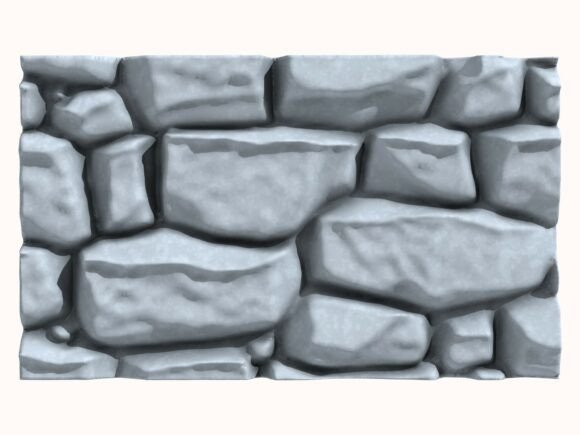
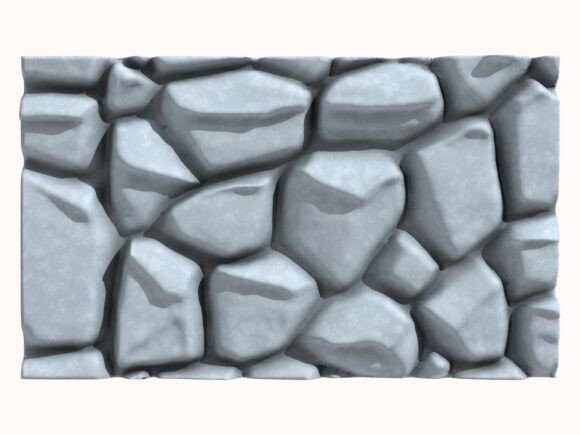
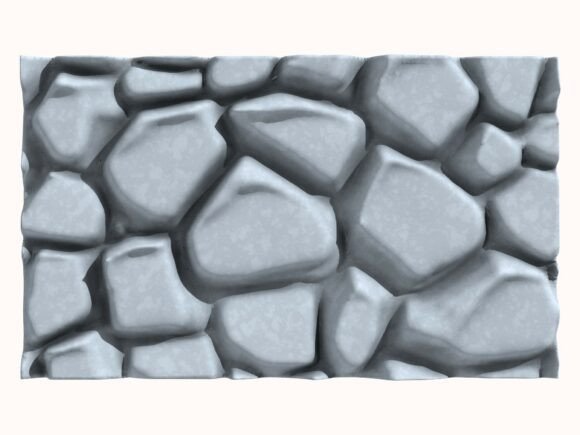
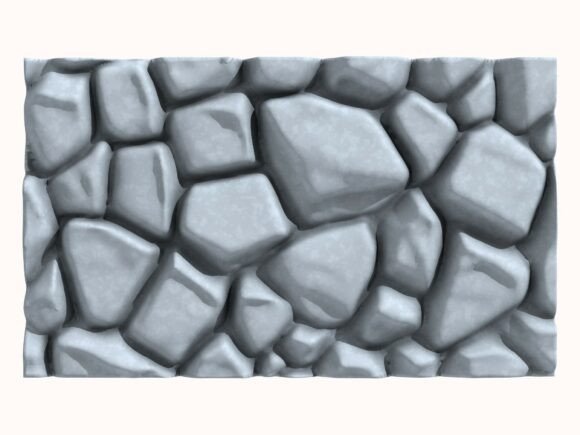
Think of it as a digital building block, but one crafted with immense care. Stone Wall 206 is not a generic, algorithmically generated mesh. It’s a model that was painstakingly built from scratch in Cinema 4D by an artist, where every stone, crevice, and surface irregularity was manually placed and shaped. This meticulous process results in a model with organic realism and unique character—something that feels constructed, not computed. The package delivers this model in six universally compatible formats: C4D, STL, OBJ, FBX, ABC, and DAE, making it ready for virtually any software pipeline or 3D printer. To help you see exactly what you’re getting, it also includes six high-resolution 2000x2000px JPEG renders, giving you a clear view of the model’s texture and geometry from all angles before you even download it.
Where and Why You’ll Use This Model
The beauty of a well-made asset like this is its sheer applicability. It solves a common, specific problem: the need for a realistic, ready-to-use environmental element that doesn’t require you to spend days modeling from reference photos or purchasing overly complex, expensive megapacks.
For Architectural Visualization and Design
Imagine you’re an architect or visualizer presenting a renovation for a historic property. You need to show how the new extension interacts with the existing stone foundation. Instead of trying to model that old wall yourself, or using a bland, repetitive texture, you drop Stone Wall 206 into your scene. Its handcrafted details immediately convey age and solidity, making your visualization more convincing and emotionally resonant for clients. It’s not just a wall; it’s a storytelling device that communicates craftsmanship and permanence.
Powering Game Development and Virtual Worlds
Indie game developers and modders often operate on tight budgets and schedules. You’re building a dungeon, a fortress courtyard, or a rustic village lane. You need environment assets that look good, perform well, and are easy to integrate. Stone Wall 206, provided in game-engine-friendly formats like FBX and OBJ, acts as a perfect, performative set piece. Its non-uniform, manually created geometry avoids the sterile look of many procedural assets, giving your game environment a hand-built feel that enhances immersion. It’s the kind of asset that lets you focus on gameplay and level design, not on painstakingly modeling every single rock.
A Foundation for 3D Printing and Physical Models
The inclusion of the STL format opens up a completely different realm. A tabletop gamer might print this wall as a terrain piece for a fantasy battle. A hobbyist could integrate it into a detailed diorama. An educator printing historical models for a classroom finds a physically robust, interesting object. Because the model is designed as a coherent structure, not just a flat texture, it translates beautifully into a tangible, tactile object when printed.
In Motion Graphics and Film Pre-Visualization
For animators and motion graphics artists, time is the ultimate currency. You’re crafting a scene that requires a quick, credible background. Stone Wall 206 can be imported, scaled, and lit within minutes. The high-resolution renders serve as a perfect quick-reference for texture and lighting studies even before the full model is loaded. This speeds up the pre-visualization process dramatically, allowing you to experiment with shots and compositions without getting bogged down in asset creation.
What to Consider Before Using Stone Wall 206
While its versatility is a major strength, the best results come from matching the asset to your specific project’s needs. A few practical considerations can help.
First, check your software compatibility. The range of formats (C4D, STL, OBJ, FBX, ABC, DAE) covers most major applications, but confirm that the format you need works smoothly with your version of Blender, Unreal Engine, Maya, or your 3D printing slicer. The provided renders are excellent for this—they let you vet the aesthetic quality upfront.
Second, think about scale and context. This is a specific wall model with its own proportions and texture. It’s ideal for close-up shots, detailed environments, or as a repeated modular element. For vast, distant backgrounds where detail is less critical, a simpler texture might suffice. Understand the level of detail your project requires.
Finally, value the handcrafted aspect. If your project’s ethos celebrates manual artistry, unique design, or non-AI-generated content, this model aligns perfectly with that narrative. Its creation story isn’t just a marketing point; it’s a guarantee of unique geometry and an absence of the repetitive patterns that can plague automated modeling.
The Real Outcome: Saving Time While Elevating Quality
Ultimately, using Stone Wall 206 isn’t about acquiring a random 3D file. It’s about delegating a complex modeling task to a specialist, so you can concentrate on the parts of your project where your own expertise lies—the lighting, the animation, the game mechanics, the architectural design. It provides a foundation of visual credibility that you can build upon. For the freelancer, it speeds up deliverables. For the educator, it provides a clear, printable example of structure. For the hobbyist, it offers a gateway into more complex scenes without overwhelming complexity.
In a digital landscape where time and authenticity are both precious commodities, a reliable, high-quality asset like Stone Wall 206 serves as a practical bridge. It turns the universal need for a realistic stone wall from a potential project bottleneck into a solved problem, freeing you up to create, visualize, and build with greater confidence and efficiency.